Have you ever experienced FAILURE? Failing at something we feel passionate about can pitch us into a pit of depression. Climbing out of that pit takes every scrap of resilience and grit we can muster. Two presidents come to mind who fought the good fight despite great personal loss and intense opposition against their causes.
Did you know President Abraham Lincoln ran for government office and FAILED at 5 elections? Have you ever failed at something hard? More than 4 times?
(Spider Solitaire doesn’t count!) What drove Lincoln to keep trying?
Notable quote attributed to Lincoln: "I’m a success today because I had a friend who believed in me and I didn’t have the heart to let him down."
Stories showing a person’s extraordinary tenacity to ultimately do something for the greater good are the most beautiful and inspiring. Before (and after) Lincoln became president in 1861, the media mocked him as unqualified, “backwoods” and crude. He was accused by southern slaveholders and rich industry leaders of being a tyrant for expanding executive power.
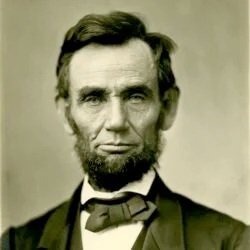
Photo: Lincoln’s eyes reveal his sadness.
Under Lincoln’s presidency, approx. 750,000 US soldiers died. Eleven states seceded from the US. Also, Lincoln endured constant assassination threats. He often fought serious bouts of depression. He famously (and prophetically) quoted Jesus: “A house divided against itself cannot stand.” (Mark 3:25) It’s true of a marriage and it’s equally true of a country.
Lincoln’s actions to abolish slavery and end the Civil War were outstanding examples of how to act decisively amid intense crisis. When entrenched in the Civil War, President Lincoln endured extreme war fatigue while editorials openly called for his removal. Yet he carried on.
Have you ever been mocked and publicly criticized but carried on anyway?
Consider what would’ve happened if Lincoln had given in to the pressures of the fight:
1.) The end of the United States
2.) The end of a democratic government
What would our lives look like today without them?
On Valentine’s Day, 1884, 17 years before he became the youngest president at age 42, Theodore Roosevelt experienced soul-killing trauma: he lost his mother and his beloved wife.
In an effort to heal his broken heart, he left the city and society and ventured West. For two years, he became “a cowboy from Harvard”. His soul was renewed by the wilderness. When he returned to the city and to politics, he was known for his energy, enthusiasm and drive. He and his lifetime friend Gifford Pinchot, were passionate to protect the country’s wilderness and natural wonders from timber barons, railroad and mining companies, and industry opportunists.
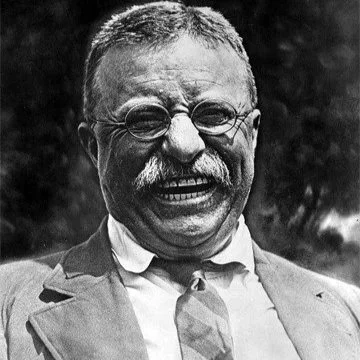
Theodore Roosevelt, known for his energy and conservation policy.
He announced to Congress that preserving the nation’s forests and fresh water was “the most vital internal question of the United States.”1 It was a new and foreign concept. Both Pinchot and Roosevelt understood that if they didn’t create public land holdings, the mega-rich would take it all for themselves, leaving no resources or beauty for future generations.
Together, despite heated debates with politicians and massive opposition from corporations, they created a conservation policy and the US Forest Service. You and I get to enjoy the fruit of their labor every time we visit a national forest or park.
Both Lincoln and Roosevelt believed that a strong nation requires ethical leadership, responsible stewardship, and courage to act for the future.
In case you’ve never read it before, here’s T. Roosevelt’s famous “Man in the Arena” quote from his speech
“Citizenship in a Republic”:
“It is not the critic who counts; not the man who points out how the strong man stumbles, or where the doer of deeds could have done them better. The credit belongs to the man who is actually in the arena, whose face is marred by dust and sweat and blood; who strives valiantly; who errs, who comes short again and again…who at the best knows in the end the triumph of high achievement, and who at the worst, if he fails,
at least fails while daring greatly.” 2
February 16th is a government holiday to honor our US presidents.
I think they deserve a day. Do you?
The Big Burn, Timothy Egan, p.42.
Daring Greatly, by Brene Brown, p. 1.
705 words